Independent study explains why RootWave technology is the safest electrical weed control

A study has shown that RootWave’s patented 18 kHz electrical weed control is safer than 50Hz or DC devices, by orders of magnitude.

In 1891, Jacques-Arsene d’Arsonval found that using high frequency alternating electric current significantly reduced the likelihood of serious injury from electric shock.

The study on RootWave’s technology built on this and undertook extensive literature searches, modelling, and analysis to assess the severity of injuries a person could sustain from electric current. The conclusions are consistent with d’Arsonval, and show that ‘operating electrical weed control devices at around 20 kHz is much safer than operating lower frequency devices (including DC)’.

RootWave’s patented higher-frequency eWeeder is 10,000 times less likely to cause cardiac arrest than a device using standard 50Hz AC in the event of accidental contact with an electrode. For DC devices, RootWave is 2,500 times less likely.

The design of the product is intended to minimise the risk of someone coming into contact with live eWeeding electrodes, but this study gives assurance that RootWave high frequency technology is significantly less harmful should that unlikely scenario occur.

Safe use of electricity

The study, completed in 2022 by professors who work for AMC Consulting and Imperial College, London found that operating at around 20 kHz gives ‘substantially greater opportunity to increase the power levels of the equipment without causing ventricular fibrillation (arrythmia of the heart/cardiac arrest), should a person come into direct contact with the electrodes.’ Concluding ‘It is thus advisable to operate weed control devices in the region of 20 kHz.’
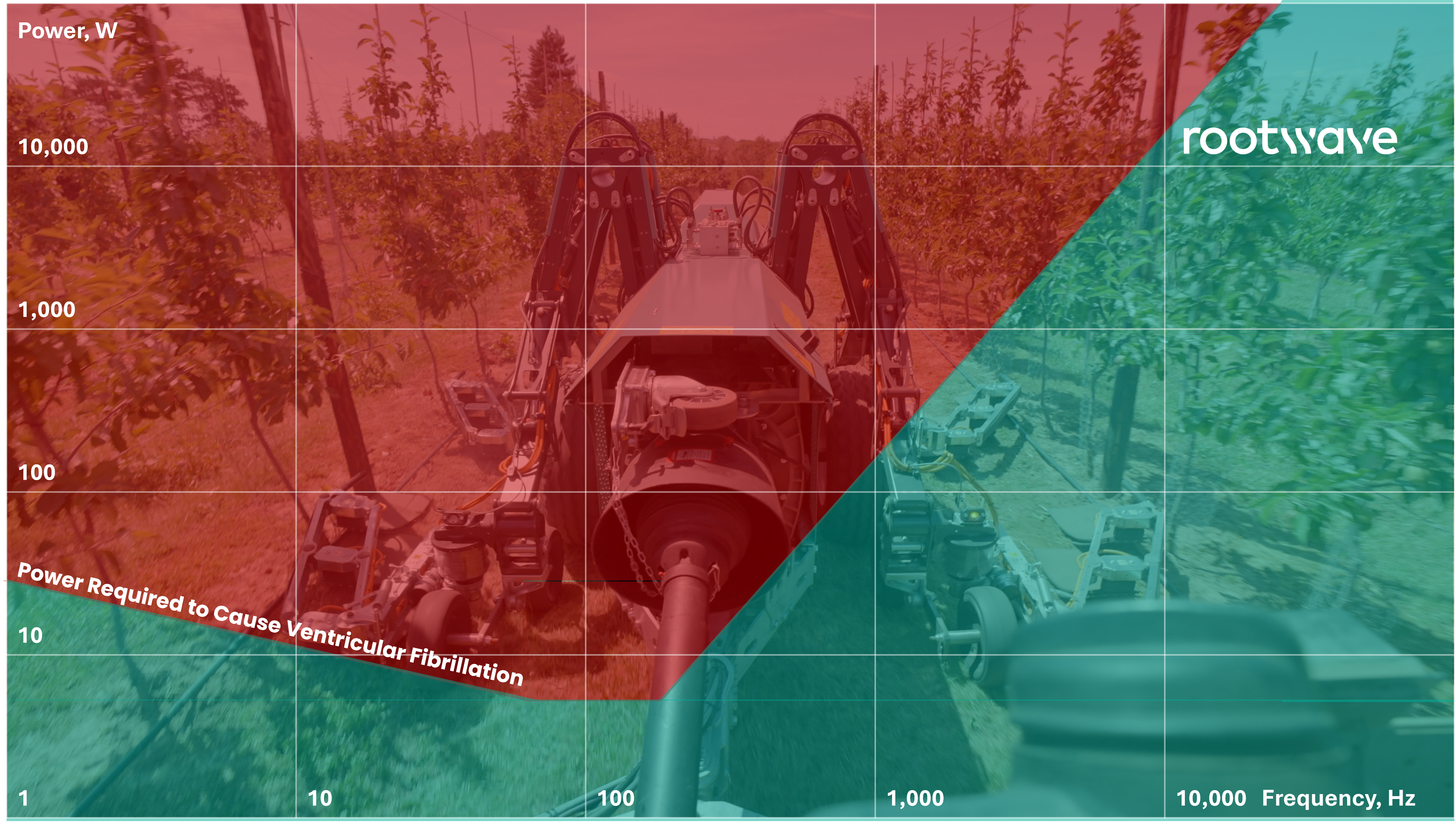
Graph: The Y axis shows electrical power, the X axis shows frequency (log. scale) with green (low) and red (high) denoting the risk of ventricular fibrillation (cardiac arrest). This shows RootWave can operate at high powers with relatively low risk. [each listing reffers to full exposure to a single eWeeding module]

Frequency, in electrical terms, is simply how many times the current oscillates from positive to negative per second. Standard 50Hz electricity oscillates 50 times per second, at 18kHz it is 18,000 times. Direct Current (DC) has no oscillation.
No impact to yield

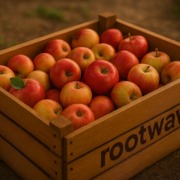
It is well known that some weed control methods can negatively impact yield leading to a loss of revenue for farmers. For example, apple farmers can risk yield losses of over 20% with mechanical cultivation due to physical damage caused to tree roots. This can equate to thousands of dollars in lost revenue per hectare per season. Independent studies have confirmed that there is no negative impact to crops when using RootWave. This creates a compelling business case for farmers to invest in RootWave to increase their revenue and profit whilst reducing costs.

Weed control that is good for the soil

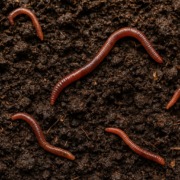
Independent trials and analysis of soil samples by soil scientists confirmed that RootWave does not negatively impact the soil or life within the soil. The analysis included population counts of macro and micro-fauna such as earthworms, nematodes, bacteria and fungi. RootWave allows soils to heal and regenerate, whereas residues from herbicides and frequent cultivation from mechanical weeding are well known to damage the health and microbiome of soils. With RootWave, farmers no longer have to compromise between weed control and soil health.

A forever solution

Mother nature is fighting back and weeds are now resistant to the majority of known herbicide modes of action. This problem is accelerating as farmers are dependent on a dwindling choice of herbicides. In addition, regulators are restricting the use of herbicides due to safety concerns. Farmers are concerned they won’t be able to economically manage weeds in the near-future putting the financial viability of their farms at risk. RootWave has an effective, low-cost solution that works using physics, not chemistry, giving farmers peace-of-mind and allowing them to build back resilience into their businesses for themselves and future generations.

No downstream impacts

Chemical herbicides do not stay where they are sprayed. They leach and drift into the food we eat, the water we drink, and the air we breathe. They are toxic in nature and can cause chronic health conditions. Safe exposure thresholds are continually being revised down as we learn more about them. They persist in our environment which accumulates the hazard and risk over time. RootWave uses pure energy to kill weeds – there are no residues – providing a solution that is good for us, good for nature, good for the farmer, and bad for the weeds.

More hectares in a season

The use of chemical herbicides is restricted to small application windows due to wind, temperature, rainfall, calendar date, crop growth stage and pre-harvest interval. They also can have use limitations due to local environmental restrictions. Mechanical weeding does not work unless soil conditions are just right – not too dry and not too wet – otherwise weeds regrow. RootWave does not have these limitations and can be used to treat on 2-5x more days than chemical herbicides and mechanical weeders, giving growers the ability to treat more hectares in a season.

Higher and more reliable profits

Farmers incur high operating costs when spraying due to the consumable cost of herbicides. The incremental cost of diesel with RootWave is significantly lower than this cost which offsets the cost of the machine over time. Herbicide prices can be volatile and are likely to increase as new patented formulations are marketed. The operating costs for mechanical weeding are typically high due to the large number of treatments required in a season, which can be as frequent as every fortnight during spring and summer. Yields can also be negatively impacted which decreases revenue. RootWave can generate higher profits for farmers as it reduces operating costs, provides more reliable cost forecasting, and maintains crop yields and farm revenue.

RootWaveHerbicideMechanical
Application
Treatments per year
Usage restrictions
Hectares in a season
Season costs
HerbicideN/AN/A
Fuel
Labour
Equipment
Costs per hectare
Small farm
Medium farm
Large farm
Revenue and profit
Yield
Profit